


Peak Union body entry Labor Council of New South Wales (1908 - )
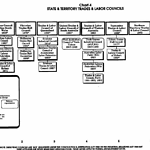
Chart 4: State and Territory Trades and Labor Councils
Details
- From
- 1908
- Functions
- Trade Union (Peak Body)
- Website
- http://council.labor.net.au
- Reference No
- Unregistered
Summary
The Labor Council was formed by six Unions in 1871. Originally it was called "Trades and Labor Council" because it covered the craft unions or unions of skilled workers as well as the newly emerging unions for bush labourers.
In 1894, the Trades & Labor Council of Sydney became the Sydney District of Australasian Labour Federation, only to change names again six years later in 1900 to the Sydney Labor Council.
In 1908, the name was changed to the Labor Council of New South Wales. In those early days the role of the Labor Council was to stimulate the growth of trade unions.
During the first thirty years, the Labor Council was dominated by two major questions: how could it help influence government?; what was the best means to settle industrial disputes? One question led to the formation of the Australian Labor Party, the other to the development of conciliation and arbitration.
During the depression years there was disillusionment among unionists with the process of conciliation and arbitration as workers' wages and conditions deteriorated.
Cooperation between unions and the federal government developed significantly during World War II. The government nominated unionists to sit on wartime committees and boards.
After 1945, the Labor Council was seized with expectations of creating a new social order. A major campaign was launched on the "40 hour week". In 1947 the state Labor government, as a result of Labor Council initiatives, legislated for the 40 hour week to apply to state awards.
In the 1950s the Labor Council, with the ACTU, led a campaign for equal wages to be paid to women in the workforce. In the late 1970s and early 1980s, the Labor Council broadened its role. An ethnic affairs officer and an arts and cultural affairs officer were appointed in 1978. In 1980, a drug and alcohol coordinator was appointed and in 1981, a women's advisory officer.
Today there are major changes occurring in industrial relations. There is a shift from centralised negotiations to workplace enterprise bargaining. This process has served to reinvigorate trade unions at individual workplaces. The Labor Council maintains a crucial role in organising, negotiating and monitoring many of these workplace enterprise agreements in NSW.
Related entries
Timeline
1871 - 1894 Trades & Labor Council of Sydney
1894 - 1900 Sydney District of Australasian Labour Federation
1900 - 1908 Sydney Labor Council
1908 - Labor Council of New South Wales
Member(s)
Archival resources
Flinders University, University Library
- National Institute of Labour Studies Collection - Records of the Labor Council of NSW, 1871 - 1966, http://www.lib.flinders.edu.au/resources/collection/special/nils/index.html; Flinders University, University Library. Details
Mitchell and Dixson Libraries Manuscripts Collection, State Library of New South Wales
- Albert William Thompson papers, 1922-1962 : pictorial material, c. 1922 - c. 1962, MLMSS 727; Mitchell and Dixson Libraries Manuscripts Collection, State Library of New South Wales. Details
- Barrie Unsworth - further papers, 1940-1991, 1940 - 1991, MLMSS 5060 ADD-ON 1935; Mitchell and Dixson Libraries Manuscripts Collection, State Library of New South Wales. Details
- Barrie Unsworth - further papers, 1980-1991, 1980 - 1991, MLMSS 7342; Mitchell and Dixson Libraries Manuscripts Collection, State Library of New South Wales. Details
- Barrie Unsworth - papers, 1958-1988, 1958 - 1988, MLMSS 5060; Mitchell and Dixson Libraries Manuscripts Collection, State Library of New South Wales. Details
- Labor Council of New South Wales further records, 1906-1982, 1906 - 1982, MLMSS 2074 Add-on 1877; Mitchell and Dixson Libraries Manuscripts Collection, State Library of New South Wales. Details
- Letter, 1891, In Add. 733/MSQ 102; Mitchell and Dixson Libraries Manuscripts Collection, State Library of New South Wales. Details
- Records, 1871 - 1935, A3823-A3859; Mitchell and Dixson Libraries Manuscripts Collection, State Library of New South Wales. Details
- Records, 1890 - 1966, 1-195c; Mitchell and Dixson Libraries Manuscripts Collection, State Library of New South Wales. Details
National Library of Australia Oral History Collection
- Barney French interviewed by Richard Raxworthy in the Labor Council of New South Wales oral history project, 1988, ORAL TRC 1948/40; National Library of Australia Oral History Collection. Details
- Darcy Ahearn interviewed by Richard Raxworthy in the Labor Council of New South Wales oral history project, 1986, ORAL TRC 1948/1; National Library of Australia Oral History Collection. Details
- Don McDonald interviewed by Richard Raxworthy in the Labor Council of New South Wales oral history project, 1994, ORAL TRC 3128/7; National Library of Australia Oral History Collection. Details
- Don Taylor interviewed by Richard Raxworthy in the Labor Council of New South Wales oral history project, 1986, ORAL TRC 1948/11; National Library of Australia Oral History Collection. Details
- Edgar Ross interviewed by Richard Raxworthy in the Labor Council of New South Wales oral history project, 1988, ORAL TRC 1948/34; National Library of Australia Oral History Collection. Details
- Edward Bennett interviewed by Richard Raxworthy in the Labor Council of New South Wales oral history project, 1988, ORAL TRC 1948/35; National Library of Australia Oral History Collection. Details
- Frank Bollins interviewed by Richard Raxworthy in the Labor Council of New South Wales oral history project, 1987, ORAL TRC 1948/26; National Library of Australia Oral History Collection. Details
- Fred Campbell interviewed by Richard Raxworthy in the Labor Council of New South Wales oral history project, 1988, ORAL TRC 1948/33; National Library of Australia Oral History Collection. Details
- Interview with Meredith Burgmann, political activist and President, N.S.W. Legislative Council - interviewer, Ann Turner, 2001, ORAL TRC 4656; National Library of Australia Oral History Collection. Details
- Jack Cambourn interviewed by Richard Raxworthy in the Labor Council of New South Wales oral history project, 1988, ORAL TRC 1948/31; National Library of Australia Oral History Collection. Details
- Jack Hooke interviewed by Richard Raxworthy in the Labor Council of New South Wales oral history project, 1986, ORAL TRC 1948/10; National Library of Australia Oral History Collection. Details
- Joe de Bruyn interviewed by Richard Raxworthy in the Labor Council of New South Wales oral history project, 1994, ORAL TRC 3128/11; National Library of Australia Oral History Collection. Details
- John Ducker interviewed by Richard Raxworthy in the Labor Council of New South Wales oral history project, 1988, ORAL TRC 1948/36; National Library of Australia Oral History Collection. Details
- Laurie Short interviewed by Richard Raxworthy in the Labor Council of New South Wales oral history project, 1988, ORAL TRC 1948/30; National Library of Australia Oral History Collection. Details
- Lloyd Ross interviewed by Richard Raxworthy and Michael Easson in the Labor Council of New South Wales oral history project, 1986, ORAL TRC 1948/21; National Library of Australia Oral History Collection. Details
- Mary Wright interviewed by Richard Raxworthy in the Labor Council of New South Wales oral history project, 1988, ORAL TRC 1948/43; National Library of Australia Oral History Collection. Details
- Nick Origlass interviewed by Richard Raxworthy in the Labor Council of New South Wales oral history project, 1988, ORAL TRC 1948/42; National Library of Australia Oral History Collection. Details
- Pat Clancy interviewed by Richard Raxworthy in the Labor Council of New South Wales oral history project, 1985 - 1986, ORAL TRC 1948/6; National Library of Australia Oral History Collection. Details
- Sid Vaughan interviewed by Richard Raxworthy in the Labor Council of New South Wales oral history project, 1986?, ORAL TRC 1948/7; National Library of Australia Oral History Collection. Details
- Stan Sharkey interviewed by Richard Raxworthy in the Labor Council of New South Wales oral history project, 1999, ORAL TRC 3128/6; National Library of Australia Oral History Collection. Details
- Tom McDonald interviewed by Richard Raxworthy in the Labor Council of New South Wales oral history project, 1994, ORAL TRC 3128/8; National Library of Australia Oral History Collection. Details
The Noel Butlin Archives Centre, ANU Archives Program
- Labor Council of New South Wales - Records, 1956 - 1990, Z431; The Noel Butlin Archives Centre, ANU Archives Program. Details
- Labor Council of New South Wales - Records, 1871 - 1966, M17; M59; The Noel Butlin Archives Centre, ANU Archives Program. Details
- Michael Easson Papers, 1973 - 1994, Z514; The Noel Butlin Archives Centre, ANU Archives Program. Details
- P.G. Hannett Papers, 1919 - 1930, N62; The Noel Butlin Archives Centre, ANU Archives Program. Details
University of Wollongong Archives
- Labor Council of New South Wales - Committee for the Defence of Democratic Rights Publication, 1935, A640; University of Wollongong Archives. Details
- Labor Council of New South Wales - Official Industrial Directory, 1959, A378; University of Wollongong Archives. Details
- Labor Council of New South Wales - Records, 1871 - 1935, D167; University of Wollongong Archives. Details
- Labor Council of New South Wales - Rules, 14 May 1946, A762; University of Wollongong Archives. Details
- Labor Council of New South Wales - Secondary industries digest, 1960, A377; University of Wollongong Archives. Details
- Labor Council of New South Wales - 'Wages, prices, profits the union's answer!', 1960, A723; University of Wollongong Archives. Details
- Rules of the Labor Council of New South Wales, A874; University of Wollongong Archives. Details
Published resources
Books
- Markey, Raymond, In Case of Oppression: The Life and Times of the Labor Council of New South Wales, Pluto Press in association with the Lloyd Ross Forum of the Labor Council of New South Wales, Sydney, 1994, 610 pp. Details
Book Sections
- Dodkin, Marilyn, 'John Ducker: The model migrant', in Brothers: Eight leaders of the Labor Council of New South Wales, University of New South Wales Press, Sydney, New South Wales, 2001, pp. 90-116. Details
- Dodkin, Marilyn, 'Jim Kenny: Rise to power', in Brothers: Eight leaders of the Labor Council of New South Wales, University of New South Wales Press, Sydney, New South Wales, 2001, pp. 6-32. Details
- Dodkin, Marilyn, 'Kenny: The Cold War, the Split, China and the peace movement', in Brothers: Eight leaders of the Labor Council of New South Wales, University of New South Wales Press, Sydney, New South Wales, 2001, pp. 33-55. Details
- Dodkin, Marilyn, 'Ralph Marsh: Inheriting power', in Brothers: Eight leaders of the Labor Council of New South Wales, University of New South Wales Press, Sydney, New South Wales, 2001, pp. 70-89. Details
- Dodkin, Marilyn, 'Peter Sams: Regeneration', in Brothers: Eight leaders of the Labor Council of New South Wales, University of New South Wales Press, Sydney, New South Wales, 2001, pp. 209-217. Details
- Dodkin, Marilyn, 'Ducker: The new force', in Brothers: Eight leaders of the Labor Council of New South Wales, University of New South Wales Press, Sydney, New South Wales, 2001, pp. 117-131. Details
- Dodkin, Marilyn, 'Ducker: The colossus', in Brothers: Eight leaders of the Labor Council of New South Wales, University of New South Wales Press, Sydney, New South Wales, 2001, pp. 132-153. Details
- Dodkin, Marilyn, 'Barrie Unsworth: The last of the hard men', in Brothers: Eight leaders of the Labor Council of New South Wales, University of New South Wales Press, Sydney, New South Wales, 2001, pp. 154-174. Details
- Dodkin, Marilyn, 'John MacBean: The consensus secretary', in Brothers: Eight leaders of the Labor Council of New South Wales, University of New South Wales Press, Sydney, New South Wales, 2001, pp. 175-188. Details
- Dodkin, Marilyn, 'Michael Easson: The end of hegemony', in Brothers: Eight leaders of the Labor Council of New South Wales, University of New South Wales Press, Sydney, New South Wales, 2001, pp. 189-208. Details
- Dodkin, Marilyn, 'Michael Costa: Rebel with a cause', in Brothers: Eight leaders of the Labor Council of New South Wales, University of New South Wales Press, Sydney, New South Wales, 2001, pp. 218-235. Details
- Dodkin, Marilyn, 'Kenny: The 1960s', in Brothers: Eight leaders of the Labor Council of New South Wales, University of New South Wales Press, Sydney, New South Wales, 2001, pp. 56-69. Details
Journal Articles
- Macarthy, P.G., 'Victorian Wages Boards: Their Origins and the Doctrine of the Living Wage', Journal of Industrial Relations, vol. 10, no. 2, 1968, pp. 116-134. Details
- Markey, Ray, 'Reflecting on the History of the Labor Council of New South Wales: An Institution and a Movement', Australian Labour History Reconsidered, 1999, pp. 222-229. Details
- Nairn, Bede, 'The 1916-17 Labor Party Crisis in New South Wales and the Advent of W. J. McKell', Labour History, vol. 16, Australian Society for the Study of Labour History, Sydney, 1969, pp. 3-13. Details
Online Resources
- 'Chart 4: State and Territory Trades and Labor Councils', in Parties to the Award, 2002, http://www.atua.org.au/ptta/024.html. Details
Digital resources
Bruce A. Smith
Created: 20 April 2001, Last modified: 7 September 2010