


Peak Union body entry Trades & Labor Council of Sydney (1871 - 1894)
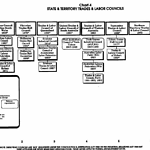
Chart 4: State and Territory Trades and Labor Councils
Details
- From
- 1871
Sydney, New South Wales - To
- 1894
- Functions
- Trade Union (Peak Body)
- Reference No
- Unregistered
Summary
The Labor Council was formed by six Unions in 1871. Originally it was called "Trades and Labor Council" because it covered the craft unions or unions of skilled workers as well as the newly emerging unions for bush labourers.
In 1894, the Trades & Labor Council of Sydney became the Sydney District of Australasian Labour Federation, only to change names again six years later in 1900 to the Sydney Labor Council. In 1908, the name was changed to the Labor Council of New South Wales. In those early days the role of the Labor Council was to stimulate the growth of trade unions. During the first thirty years, the Labor Council was dominated by two major questions: how could it help influence government?; what was the best means to settle industrial disputes? One question led to the formation of the Australian Labor Party, the other to the development of conciliation and arbitration.
During the depression years there was disillusionment among unionists with the process of conciliation and arbitration as workers' wages and conditions deteriorated. Cooperation between unions and the federal government developed significantly during World War II. The government nominated unionists to sit on wartime committees and boards. After 1945, the Labor Council was seized with expectations of creating a new social order. A major campaign was launched on the "40 hour week". In 1947 the state Labor government, as a result of Labor Council initiatives, legislated for the 40 hour week to apply to state awards. In the 1950s the Labor Council, with the ACTU, led a campaign for equal wages to be paid to women in the workforce. In the late 1970s and early 1980s, the Labor Council broadened its role. An ethnic affairs officer and an arts and cultural affairs officer were appointed in 1978. In 1980, a drug and alcohol coordinator was appointed and in 1981, a women's advisory officer.
Today there are major changes occurring in industrial relations. There is a shift from centralised negotiations to workplace enterprise bargaining. This process has served to reinvigorate trade unions at individual workplaces. The Labor Council maintains a crucial role in organising, negotiating and monitoring many of these workplace enterprise agreements in NSW.
Related entries
Timeline
1871 - 1894 Trades & Labor Council of Sydney
1894 - 1900 Sydney District of Australasian Labour Federation
1900 - 1908 Sydney Labor Council
1908 - Labor Council of New South Wales
Member(s)
Archival resources
Flinders University, University Library
- National Institute of Labour Studies Collection - Records of the Labor Council of NSW, 1871 - 1966, http://www.lib.flinders.edu.au/resources/collection/special/nils/index.html; Flinders University, University Library. Details
Mitchell and Dixson Libraries Manuscripts Collection, State Library of New South Wales
- Records, 1890 - 1966, 1-195c; Mitchell and Dixson Libraries Manuscripts Collection, State Library of New South Wales. Details
- Records, 1871 - 1935, A3823-A3859; Mitchell and Dixson Libraries Manuscripts Collection, State Library of New South Wales. Details
National Library of Australia Manuscript Collection
Published resources
Book Sections
- Hagan, James, 'Unions: Context and Perspective 1850-1980', in Ford, Bill and Plowman, David (eds), Australian Unions: an Industrial Perspective, 1983, pp. 30-58. Details
Journal Articles
- Curthoys, A., 'Conflict and Consensus', Labour History, vol. 35, Australian Society for the Study of Labour History, Sydney, 1978, pp. 48-65. Details
- Markey, Ray, 'Populist Politics', Labour History, vol. 35, Australian Society for the Study of Labour History, Sydney, 1978, pp. 66-79. Details
- Nairn, Bede, 'The Role of the Trades and Labor Council of NSW, 1871-1891', Historical Studies: Australia and New Zealand, vol. 7, no. 28, University of Melbourne Press, Melbourne, 1957, pp. 421-440. Details
- Nairn, Bede, 'The Social Role of the Labour Movement in NSW in the 1870s', Labour History, vol. 1, Australian Society for the Study of Labour History, Sydney, 1962. Details
Online Resources
- 'Chart 4: State and Territory Trades and Labor Councils', in Parties to the Award, 2002, http://www.atua.org.au/ptta/024.html. Details
See also
- Coolican, A., 'Solidarity and Sectionalism in the Sydney Building Trades: The Role of the Building Trades Council 1886-1895', Labour History, vol. 54, Australian Society for the Study of Labour History, Sydney, 1988, pp. 16-29. Details
Digital resources
Bruce A. Smith
Created: 20 April 2001, Last modified: 6 August 2010